
Considerations for Refugees and Immigrants
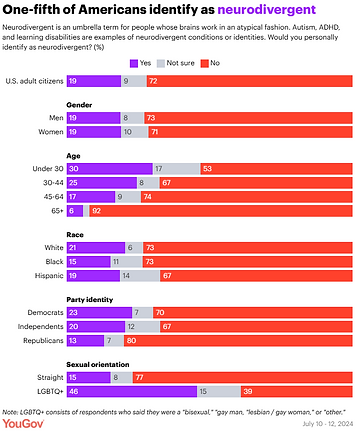
In 2023, there were 47.8 million immigrants residing in the United States (Batalova, 2025). Knowing that approximately one in four (28.7%) of adults in the United States have some sort of disability, this means that there are 13,718,600 immigrants in the United States living with a disability (CDC, 2025) – and that does not even include the number of immigrant and refugee children living in the United States with a disability! So even before considering how we need to adapt our services and programming to create a welcoming and inclusive space for refugees and immigrants, we need to keep at the top of our minds what we need to do to create a welcoming and inclusive environment for those in our community with disabilities or who are neurodiverse. Always remember to:
-
Keep accessibility at the top of your mind. Ensure your library spaces meet or exceed the ADA standards. Be sure to provide sensory-friendly spaces for your neurodiverse patrons, as well as assistive technology (like screen readers, large key keyboards, and hearing loop systems). And make sure your collections include accessible materials like large-print books, audiobooks, and Braille materials.
-
Create inclusive programs and services. Offer storytimes for children who are neurodiverse, as well as sensory-friendly moving screenings and accessible arts and crafts programming. Highlight books in the collection that feature characters who are disabled or books that are written by disabled or neurodiverse authors.
-
Get out there and do outreach to form partnerships and engage with the community. Form partnerships with special education programs in the local school district and independent living centers. Do outreach at group homes and day programs and include disabled people and their caregivers in your advisory committees so they can provide feedback and guidance on library policy and program development.
-
Train your staff and get your colleagues excited. If your library does not already have training in this area, request training on disability awareness and cultural humility.
-
We need to remember to do these things for all our community who may be disabled or neurodiverse. But when a person is neurodiverse or disabled and also an immigrant or refugee, there are other things we need to consider. Let’s first look at some of the reasons why immigrants and refugees utilize libraries.

Why Immigrants and Refugees Use Libraries
In 2011, Audunson, Essmat and Aabø released the findings of their study of how immigrant women in Norway utilize libraries, and what libraries mean to them. The participants in their study consisted of three respondents from Iran who had Farsi as their native language, three from Afghanistan who had Dari as their native language, and three from Kurdistan who had Kurdish as their native language. Six of these participants came to Norway to reunite with family, while three of the participants were political refugees. Each of the participants were interviewed, not about the frequency of their library use, but about how they use the library and what it means to them. They found that these women use the libraries for several reasons:
-
Immigrants use the library as a place for consolation. They have migrated to an environment where everything is unknown and social networks must be built up from scratch, all while not having the linguistic skills to communicate in their new country. They are using the library to cope with a difficult life situation that is characterized by emotional stress, isolation, and loneliness. The library is a “haven” where they can find consolation and live out their sorrow and despair together with friends without being seen by others.
-
Immigrants use the library as an arena for integration and learning about the new country. In this study, nearly all of the respondents reported that the library had played a vital role in their efforts to master the Norwegian language. Many of the participants indicated that they started off by borrowing and reading children’s books to develop their new language and then moved onto more advanced adult literature as their new language improved. They also used the library to learn about life, customs, and habits of Noregians simply just by sitting in the library and observing – learning about the rules and norms that regulate social behavior in their new country.
-
Immigrants use the library as a meeting place. All the participants indicated that the library is a safe place where they can perform a variety of activities alone or in groups. They also reported that the library has allowed them to establish contact with and get acquainted with strangers – both compatriots as well as Norwegians. And by taking part in organized activities at the library, they were able to meet with Norwegians of varying ages.
-
Immigrants use the library as a bridge to the culture of their home country. The participants valued the fact that Norwegian public libraries give priority to developing collections in the languages of the diverse groups of immigrants. They used movies and literature from their home countries to soften the effects of homesickness. They also used newspapers and journals to find news from their home countries. And those participants who had children used the library to introduce the children to the literature, language, and culture of their home country.
Audunson, Essmat and Aabø showed in their study that, for immigrant women, the public library represents:
“a complex meeting place that supported their integration into Norwegian society in a variety of ways, and with relevance in a variety of life spheres. It offered bridges to the culture of the new country, as well as bridges to their culture of origin. It offered an arena where they could move smoothly and seamlessly from observing the culture of the receiving country from a distance to active participation. It was an arena for comfort and consolation in a difficult life situation, as well as for activity and participation, and it was related to different spheres of life, from the private sphere of friendship and family to education and employment. The respondents reported uses that were instrumental and linked to the system world of work, education, bureaucracy, and formal information, as well as uses linked to the life world of meaning, culture, and individuality.” (Audunson et al., 2011)
Audunson, Essmat and Aabø’s results show that the immigrants in their study have a high degree of trust in the library as a public institution. So, knowing this, how do we ensure that the libraries where we work are welcoming enough to get immigrants and refugees to come through the library door to begin with? How do we get the word out to these communities?
Making Your Library Immigrant and Refugee-Friendly
Since 2008, the American Library Association (ALA), in conjunction with Dollar General stores, have funded the American Dream Literacy Initiative (ADLI). The grants provided by the ADLI have allowed libraries to augment their print and digital English as a second language (ESL) collections, increase computer access and training, provide job training, hold English language learning (ELL), general educational development (GED) and citizenship classes, and raise the visibility of services for immigrant populations. I highly recommend you all spend some time taking a look at their website, as it has a ton of resources available for your use - https://www.ala.org/tools/programming/americandream/about.
On this page I would like to highlight a specific resource available on the ADLI page – their Engaging Multilingual Communities and English Language Learners in U.S. Libraries toolkit (American Dream Literacy Initiative, n.d.). This toolkit should be your first stop in prepping your library to be accessible and welcoming to the community of refugees and immigrants in your area! The ADLI states that you should begin by:
-
Staff Equipping: Recruit to reflect your community.
-
Staff and volunteers that know the cultures and speak the languages of the community are a key part of creating a welcoming environment.
-
-
Partnerships & Politics and The Collection: Find your local immigrant community groups.
-
Talk to members to include them in the planning process and to establish their information, collection, and service needs – surveys and focus groups can be useful tools!
-
-
Program & Service Design: Meet them where they are.
-
Outreach and mobile services can help alleviate library deserts and build connections.
-
Make sure your hours work for your whole community. Consider adding virtual access points for off-hours.
-
-
Language Access and Marketing: Prepare inclusive signage and forms in the various languages of your community.
-
Think about ways to connect with patrons – using the community to help with language barriers or tools.
-
Many first-time visitors are unfamiliar with library services; policies should help them feel welcome at the library with a clear understanding of available support.
-
-
Their Top 10 Recommendations for serving speakers of languages other than English are:
-
Hire bilingual library staff. Recruit bilingual volunteers. Make a list of library staff members who speak other languages.
-
Make sure your body language is open and attentive. Listen and ask questions.
-
Don’t make assumptions about what they may know about libraries and lending policies and what they may need. Honor the choice of each individual, communicate in their language of preference.
-
Display “Welcome” signs, library activities, and materials information in the languages spoken in your community.
-
Provide library application forms and orientation materials in your library users’ native languages. Always have templates of key resources that label the information items both in English and the other language(s). Consider a “What language do you speak?” flyer labeled in English and other languages to help identify which materials the person needs.
-
Utilize available technology tools to improve communication: Google Translate, phone language access services, etc. Ensure your staff is properly trained to use them.
-
Ensure your technical services team classifies and tags materials appropriately. Learn how to retrieve all language materials and resources at your library – what search terms to use in your public access computer (PAC), e.g., SUBJECT: Chinese Language Materials, Bilingual Spanish, etc.
-
Know the important dates, holidays and festivals celebrated in your community. Create displays to acknowledge and commemorate these. Create programming that represents your community. Collaborate with your local heritage organizations.
-
Get to know local community newspapers and ethnic media. They can provide free newspapers and translate and publish your events and services to share with their readers.
-
Contact your federal, state, local municipal, and social service agencies; ask for printed multilingual information materials for public distribution. Locate online resources offering multilingual information, such as the Internal Revenue Service, Bureau of Motor Vehicles, and have them available at your Library or link to it on your website.
The library can be a scary place for someone who has just moved to the United States. Immigrants and refugees have had their entire lives turned upside down and are learning to exist in an environment that is vastly different than where they came from. We need to make our libraries a welcoming space. The Association for Library Service to Children has created a wonderful web resource – Becoming a Welcoming Space for Immigrants & Refugees (https://www.ala.org/alsc/publications-resources/professional-tools/welcoming-spaces). Please go check out their website – there is a wealth of information on how to leverage your programs for this community, how to connect with community partners, and how to be a community presence, just to name a few. They have created this beautiful handout for library staff which can be shared with colleagues and community organizations serving immigrant and refugee children and families (Becoming a Welcoming Space for Immigrants & Refugees | Association for Library Service to Children, n.d.).


Another set of resources available, provided by the American Library Association, can be found at the Libraries Respond: Immigrants, Refugees, and Asylum Seekers webpage (https://www.ala.org/advocacy/advocacy/diversity/libraries-respond-immigrants-refugees-and-asylum-seekers). The Libraries Respond webpage provides useful definitions, links to welcoming and programming support, a list of recommended books and organizations, staff support resources, links to ALA resources as well as resolutions passed by the ALA related to immigrants and refugees (Libraries Respond, n.d.).
Immigrants and refugees who are disabled or neurodiverse face an additional set of challenges when it comes to using the library. So we need to ensure that our libraries are welcoming to the immigrant and refugee community, and we need to do outreach to bring immigrants and refugees into our libraries, but we also need to make sure they are accessible to those immigrants and refugees who are disabled and/or neurodiverse. So always keep in mind ways to make your library, programming, and services accessible. For our disabled and neurodiverse community, we must keep that always at the top of our minds.
Picture Credits: Header and Footer images courtesy of iStock. One-fifth of Americans identify as neurodivergent image courtesy of YouGov (https://today.yougov.com/health/articles/50950-neurodiversity-neurodivergence-in-united-states-19-percent-americans-identify-neurodivergent-poll). Disability Impacts All of Us Infographic courtesy of the Center for Disease Control (https://www.cdc.gov/disability-and-health/articles-documents/disability-impacts-all-of-us-infographic.html). Becoming a Welcoming Space Handout courtesy of the Association for Library Service to Children (https://www.ala.org/alsc/publications-resources/professional-tools/welcoming-spaces).